
How many restrooms does a race in Goodyear need?
Runner counts drive the number more than course length does. A start corral of 500 people moves fast, but a finish line festival with food trucks holds a crowd for hours, so it needs more units per capita. OSHA 1926.51(c) sets construction-site ratios at one toilet for 20 workers or fewer, and race organizers use that same math as a rough floor for staff and volunteer counts, even though runners aren't covered by it directly. For spectators strung along a course through Goodyear, most race directors space standard units every quarter mile at high-traffic clusters like aid stations and the finish chute. Add at least one ADA accessible unit at the start, one at the finish, and one at any mid-course aid station with a medical tent. If your course also runs near Avondale, about 2.6 miles northeast of central Goodyear, and you're pulling spectators from both cities, size your finish-line cluster for the bigger combined crowd, not just local turnout. A restroom trailer rental works well at the finish festival where people linger, while porta john rentals cover the course itself. Check our guide on how many porta potties you need before you finalize your order, and build in a buffer, because a race with a beer garden or long awards ceremony holds crowds longer than the clock suggests.
What does race day power and lighting cost?
Pre-dawn starts and post-sunset finish lines need light towers and sometimes a generator or power pole for timing equipment, announcer systems and food vendors. If you're running a temporary power pole for a finish-line stage or timing tent, ask the rental crew how to brace a temporary power pole before it goes up: anchor the pole base with a rated bracket or guy wires rated for the load, keep cable runs off the running surface, and confirm GFCI protection per OSHA 1926.404(b)(1)(ii) before anyone plugs in a speaker system or a coffee cart. A light tower at the start line costs less to run than most people expect, and pairing it with a temporary power pole keeps timing clocks and PA systems on a stable circuit instead of daisy-chained extension cords across a parking lot. Barricades matter here too. Keep crowd control fencing and any barricades meeting OSHA 1926.202 and ANSI D6.1 well clear of power lines and pole guy-wires. A temporary fence rental or crowd control barrier also keeps spectators back from restroom lines and staging areas, which matters when a Goodyear course funnels thousands of people through a finish chute at once. Budget delivery separately: delivery fees for restrooms and fencing run in their own bracket and aren't included in the daily unit rate.
What should a race day restroom order include?
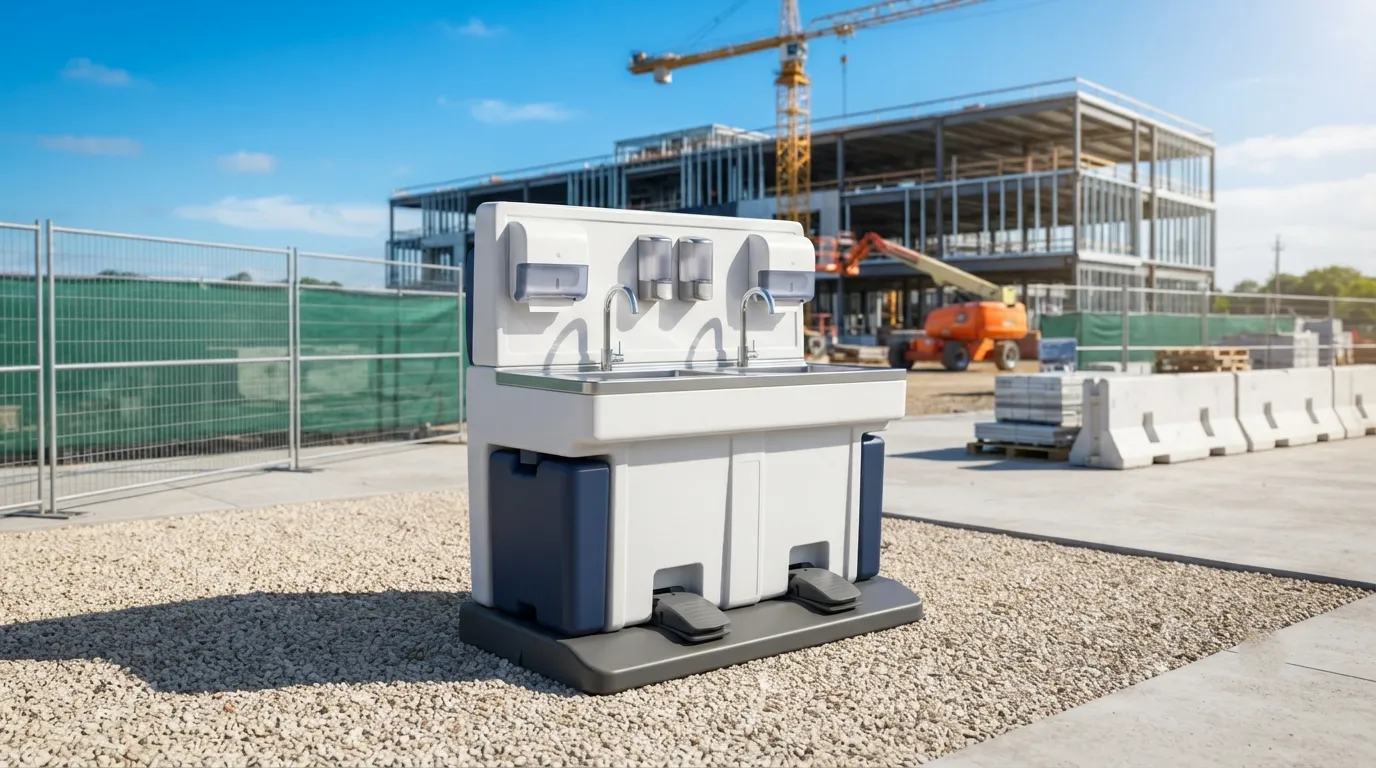
Most Goodyear race organizers order a mix: standard units along the course, ADA units at start and finish, a bank of deluxe flushable units or a small restroom trailer at the VIP or finish festival area, and at least one handwashing station near any food vendor. Handwashing matters more than people think at a race with food trucks or a post-race pancake breakfast. 29 CFR 1910.141(d)(2) requires soap and towels or a hand-drying device at washing stations, not sanitizer alone, so pair every handwash unit with real soap and paper towels, not a hand sanitizer stand by itself. Pricing depends on unit mix and event duration:
| unit | duration | typical price |
|---|---|---|
| standard | event | $400 |
| ada | weekend | $240 |
| deluxe | weekend (per week band) | $250 |
| trailer | event | $3,500 |
| delivery_fee | weekend | $200 |
See our event restroom rental page for full event pricing, or check porta potty rental cost for single-day numbers if your race is a smaller local fun run. A marathon course that also serves as a training route or charity walk often reuses the same equipment for a golf tournament or festival later in the season, so ask about multi-event rates. Placement matters as much as count: keep units off narrow sidewalks and confirm ground clearance with our porta potty placement guide before delivery day.
How far in advance should I book race restrooms in Goodyear?
Book 2 to 3 weeks out for most races, longer for anything over 1,000 runners. Weekend races compete for the same trucks as weddings and festivals, so early booking protects your delivery window. Confirm final counts about a week before, once bib numbers are closer to final.
Do I need ADA units even for a small 5K?
Yes. ADA Standards 213.2 requires at least one accessible unit whenever units are clustered, even for a small field. Place it at both the start and finish if your budget allows, since one unit rarely covers both ends of a course efficiently.
Can I get restrooms delivered the morning of the race?
Some races do early morning delivery, but it's riskier with road closures already in place. Most Goodyear organizers have units delivered the evening before, staged behind barricades, so the crew isn't fighting course setup traffic at 5 a.m.
What happens to restrooms during the race itself?
Units usually aren't serviced mid-race. Order enough capacity upfront rather than counting on a mid-event pump-out, since service trucks can't easily reach a closed course. A septic pumping service visit works better scheduled the night before or the evening after.
Do we need handwashing stations if we already have hand sanitizer?
No, sanitizer alone doesn't meet the standard. 29 CFR 1910.141(d)(2) calls for soap and towels or a hand-drying device at wash stations, which matters most near food vendors, medical tents and any post-race meal service.
Next step
Get a delivery date
Tell us the address, the dates and the headcount. We size the order and confirm the route.